Friday May 20th: visiting Sourches Castel

Friday May 20th: visiting Sourches Castel

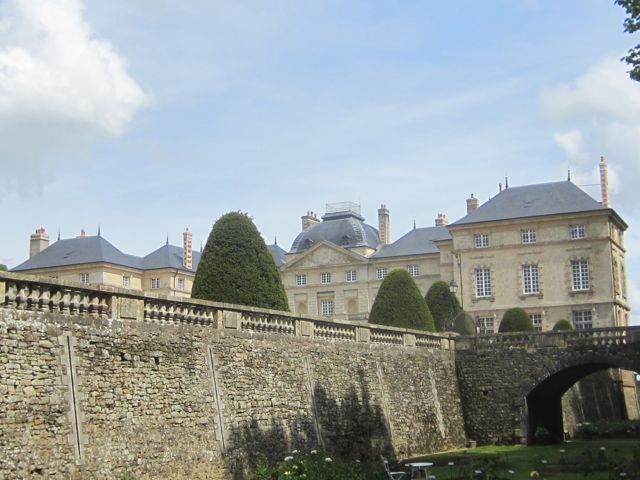
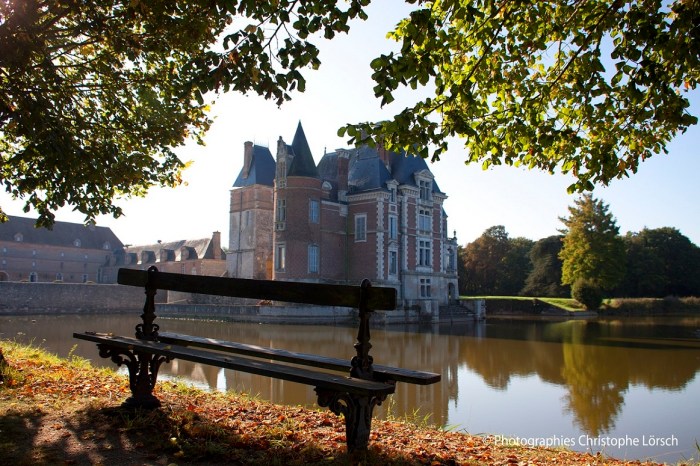
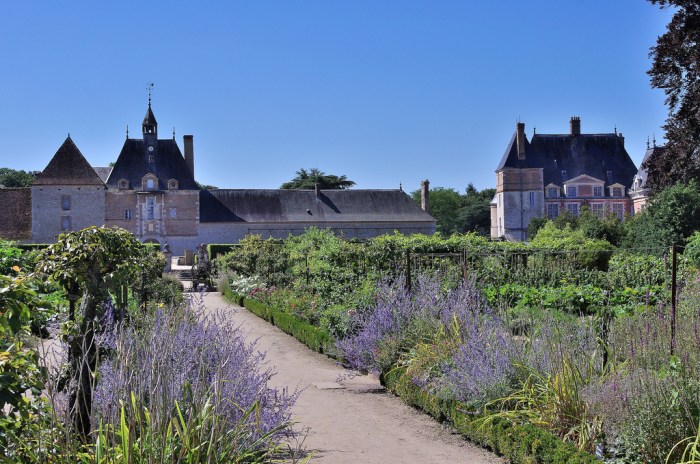
Last Friday, we went to visit a small castel called Château de Sourches. It is located near a city called Le Mans, which is famous for its 24 hours car race.

IMG_4495

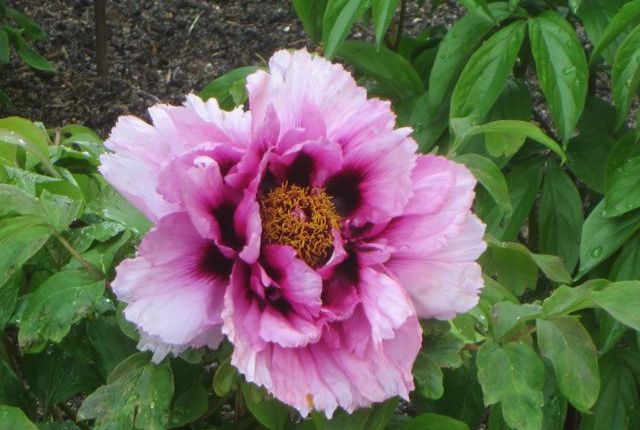
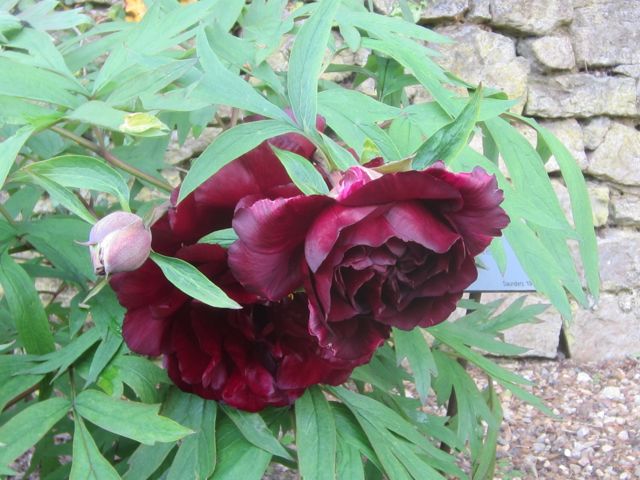
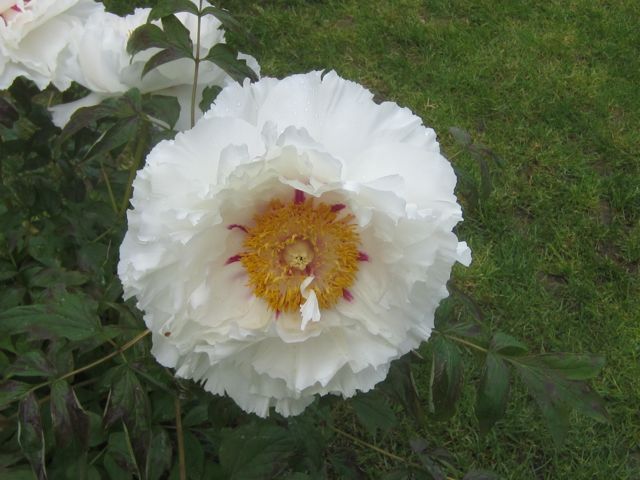
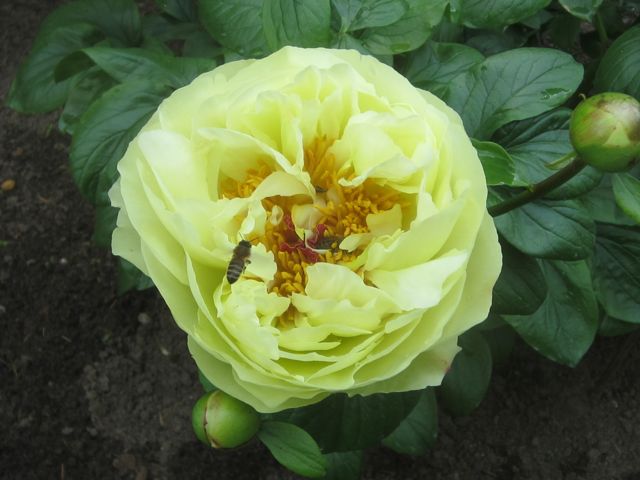
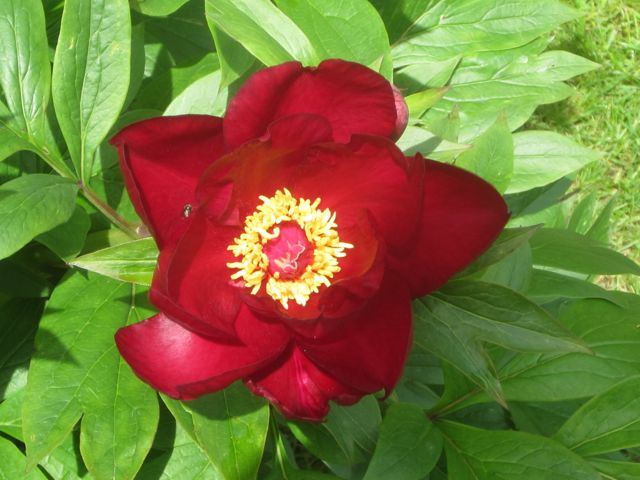
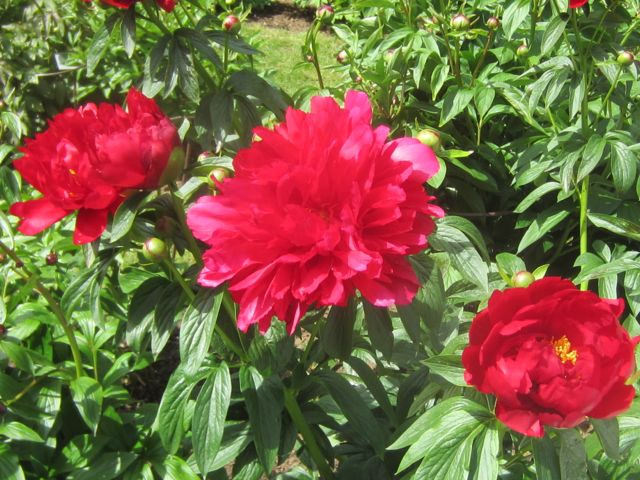
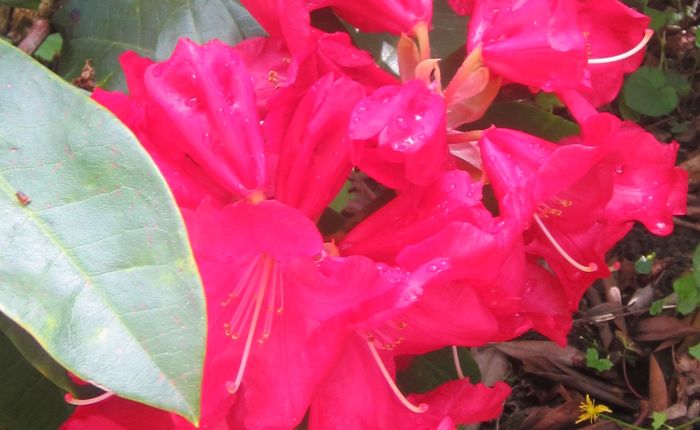
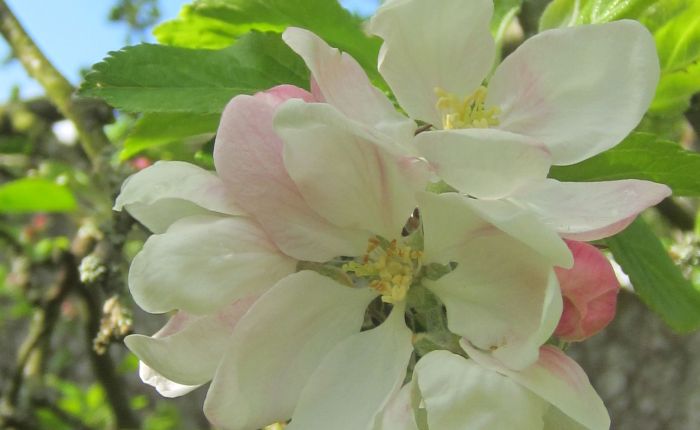
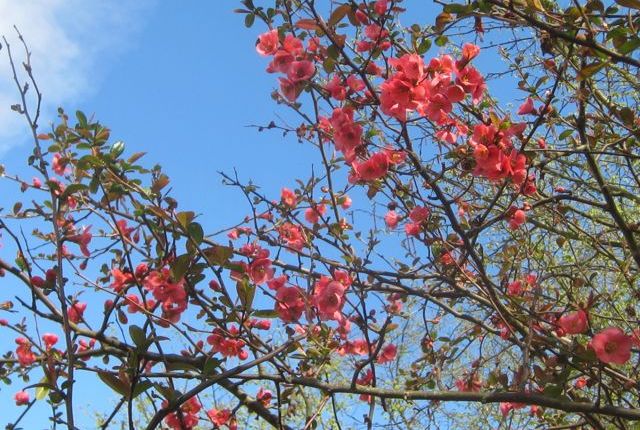
In this castel, there is the largest collection of peonies in France. The garden has been built inside the moat of the castel. Although all the peonies were not all in blossom because of the bad weather we have during this spring, it was really a beautiful place with hundreds of different flowers and colors. Here are a few peonies, the ones we liked the most….Enjoy!

IMG_4475

IMG_4483

IMG_4485

IMG_4512

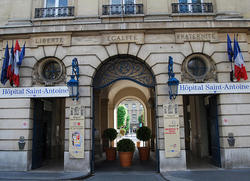
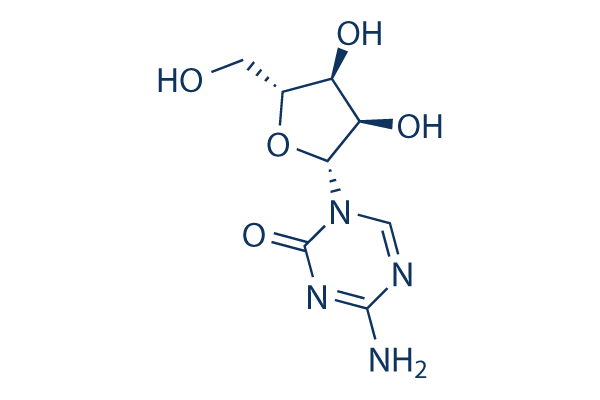
Next week, it will be another story! Back to Saint Antoine on monday  for a check up. Then on tuesday a new round of Vidaza will start, but this time I will be prepared: I have my friend, the “Zophren pill” and “Movicol” too: everything is chemistry!

IMG_4534

My first visit with the doctor specialist of transplant

My first visit with the doctor specialist of transplant

On Tuesday May 17th, we had an apointment with the doctor specialist of transplant. She explained with a lot of details the process.

The first very good news she gave us was that they had found a 100% matching person! Yes! The drawback is that the process will be delayedd by a few weeks, but it is not a big deal!

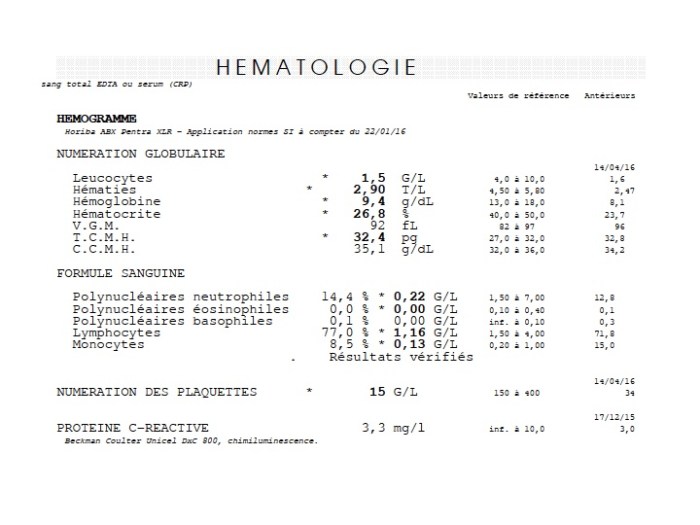
The first day of hospitalization, a catheter is fixed on the chest. It will be used for all the injections, avoiding to destroy the veins. Then the chemotherapy starts. It lasts around 5/6 days. It is made to “clean up” the bone marrow: to remove the faulty stem cells. At the end of the process, the harshest part, I will be in “medullar aplasia”: no white blood cells, no red blood cells, no platelets. Transfusions and antibiotics will be needed!

Then the hematopoietic stem cells of the donor will be injected. The process is similar to a blood transfusion. The stem cells are cleaver enough, so that they will find their way to the bone marrow! Usually, they start to work after around 2 weeks, and the first blood cells produced are white blood cells. Daily blood analysis are used to follow the process…

In average, it take 6/8 weeks before the doctors give the green light: go home and be careful!

Of course, there will be “side effects” such as losing hairs, vomiting, etc… Very often, the “new hairs” are growing back with different characteristics. I am dreaming of red, curly hairs! Why not?

Once at home, it will not be the end of it. At the beginning, I will visit the day hospital twice a week (for one month); then it will be once a week (for one month), then not so often….up to the finish line when I will be free again and go visit my family and friends without restriction!

A last information: as the hospitalization will be delayed by a few weeks, I will have the pleasure to have a second chemotherapy with Vidaza. It will start on May 24th….

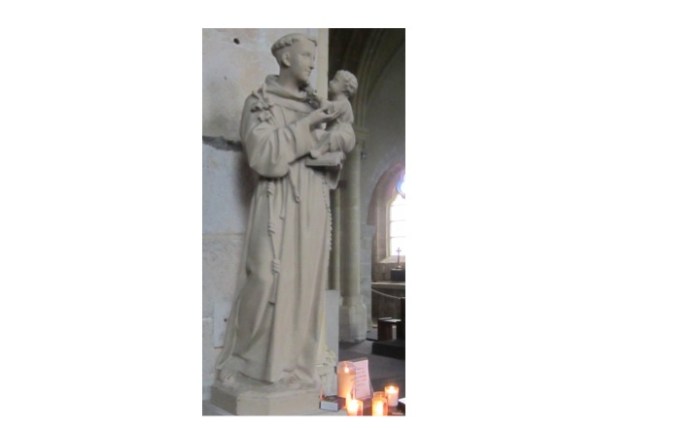
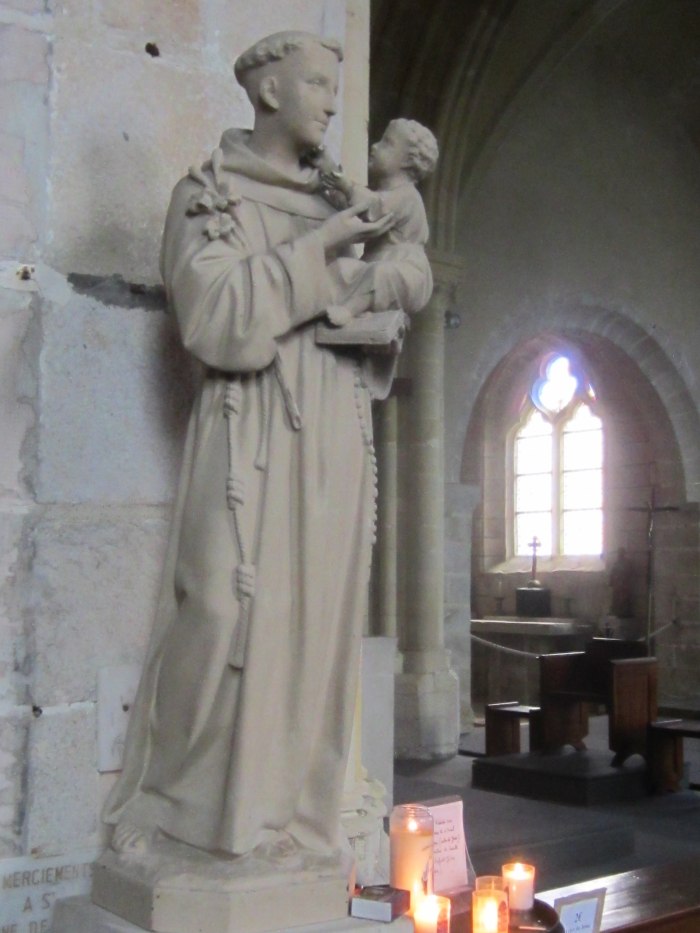
The statue at the top of this page is Saint Antoine!

Our trip to Normandy

Our trip to Normandy

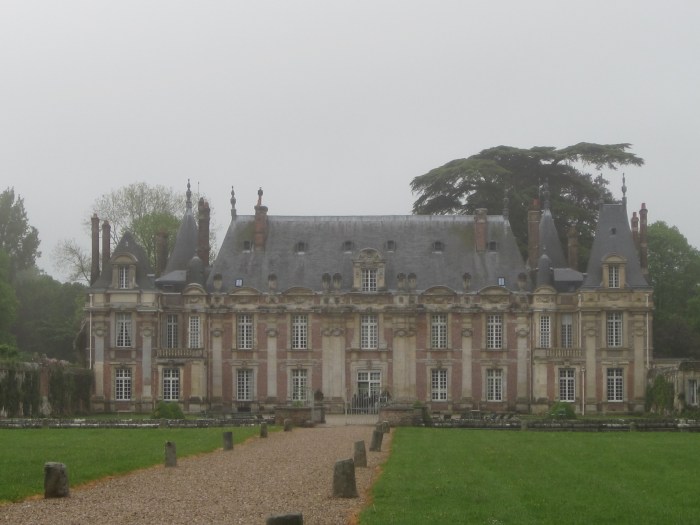
After my platelets shoot last Tuesday, I was ready for our trip to Normandy! On Wednesday, we left Bures for our first stop at “the château of Miromesnil”, a wonderful bed and breakfast in Tourville sur Arques. We visited the potager, which is a mixte of flowers and vegetables: wonderful! We spent a night there in a round room inside a tower, and the next day we visited the castel itself and a small chapel…

IMG_4392IMG_4395IMG_4383

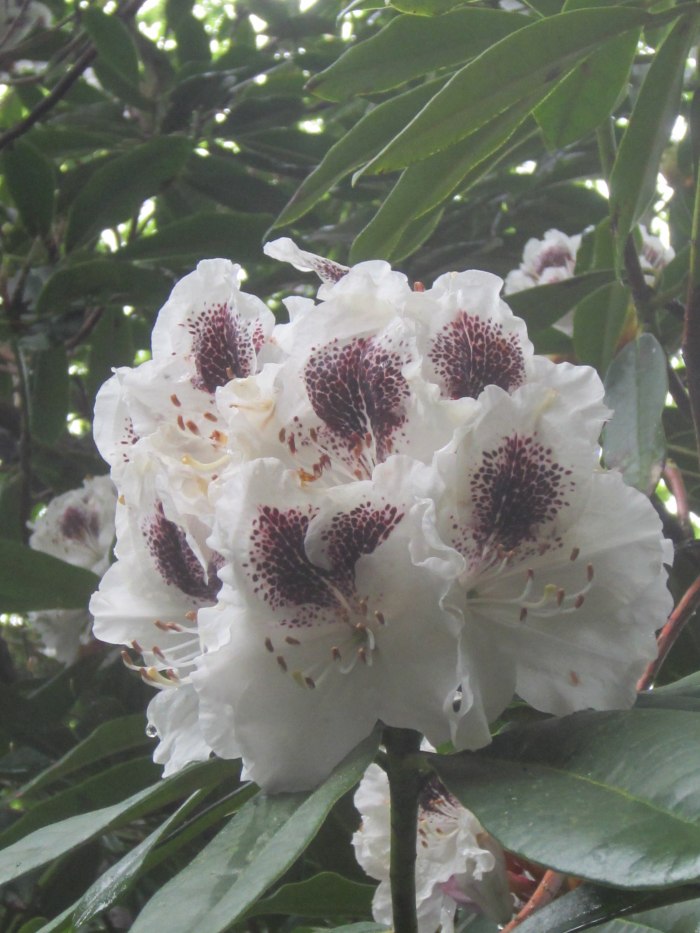
We headed then for “the beach” at Yport, a small village on the cost. On the way, we stoped to visit another beautiful garden “Le bois des Moutiers” with a large selection of rhododendrons. Although the weather was not great, we enjoyed the visit…

IMG_4418.jpg

IMG_4426

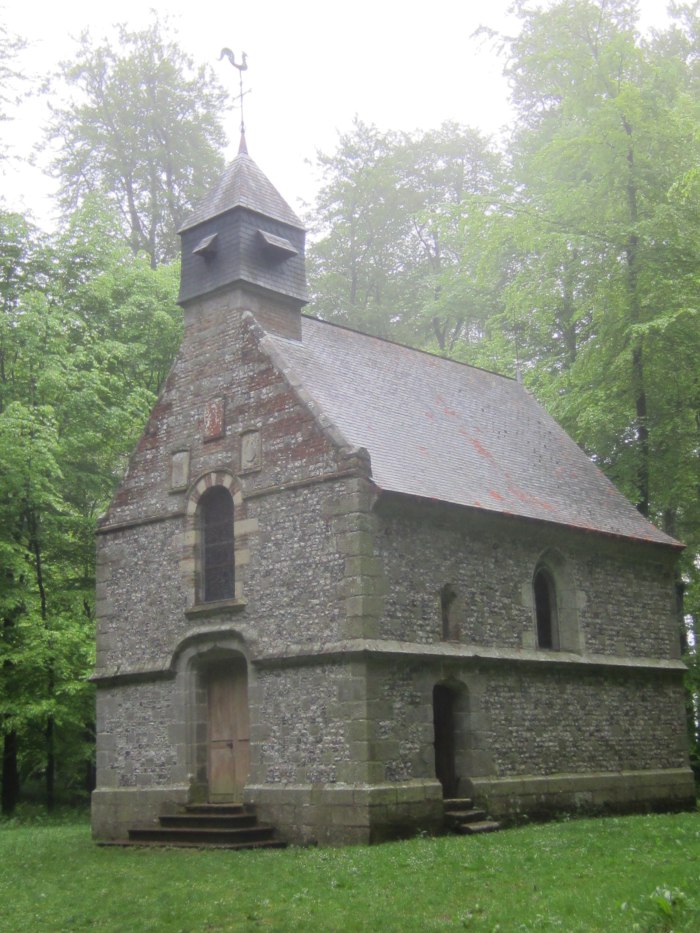
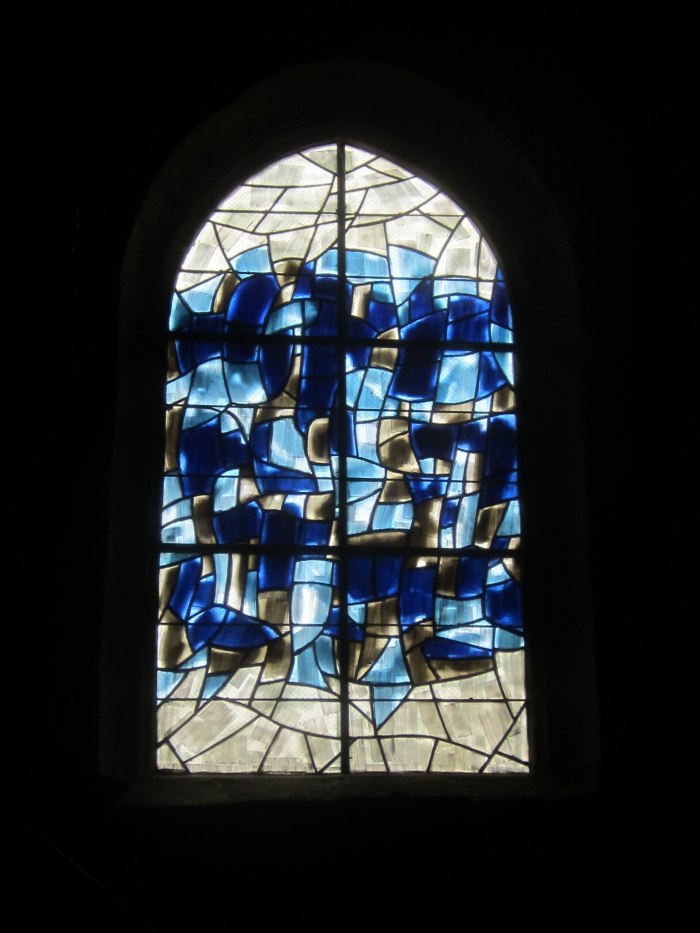
We also visited a small chapel “with a vue” but without vue this day because of the fog ;-)!  The chapel had stain glass windows made by Georges Braque, and yes a statue of Saint Antoine my good friend!IMG_4403

IMG_4404

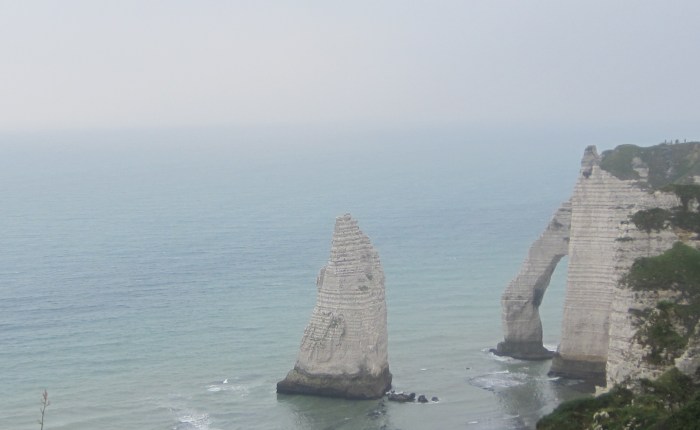
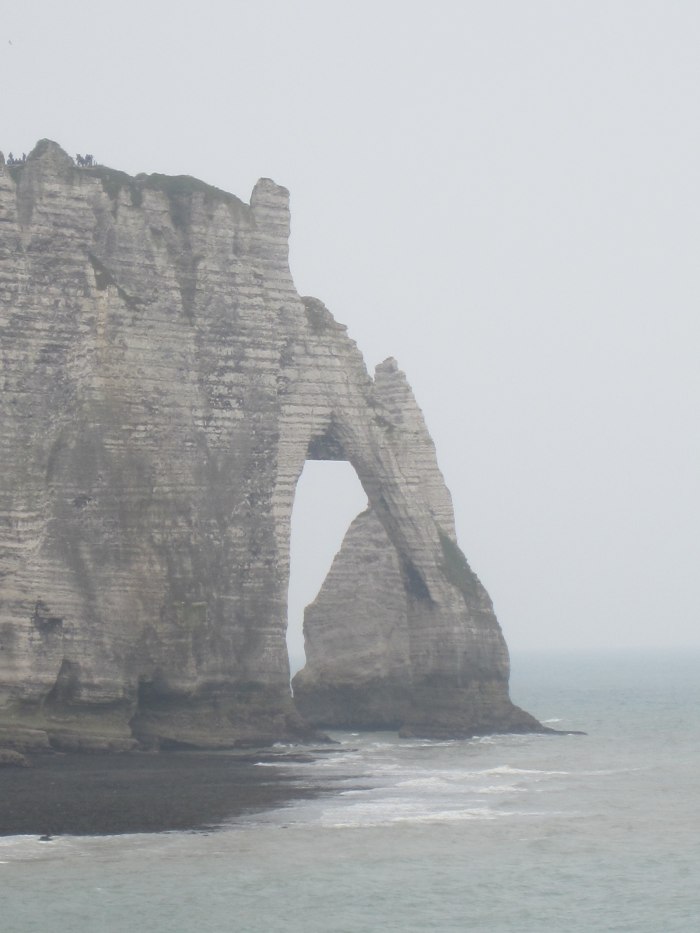
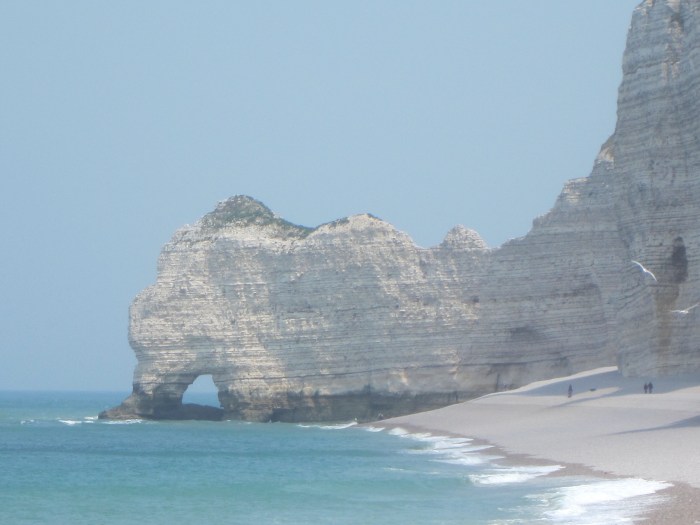
In Yport, we had a room on the beach! The first day, we did not see the frontier between the sea and the sky!!! The next day, Friday, we went to Etretat, a city famous for its cliffs. We did a walk on the top of the cliff, so we had various vues of this wonderful place…

IMG_4435

At last, the sun came, so we spent some time “on the beach” to have a rest (not without a coat of course ;-)!).

IMG_4449

On Saturday, we headed back home. It was a freezing day! We stopped by the “Abbaye Saint Georges” located near the Seine river. So cold and windy!

IMG_4459

IMG_4462

IMG_4472

After eating “une crêpe” we went back home…End of the trip to Normandy!

On Tuesday May 17th, I have an apointment with the doctor in charge of the transplants at Saint Antoine: back to the real world!

May 10th:paying another visit to St Antoine

May 10th:paying another visit to St Antoine

Diapositive1

My last blood analysis from last tuesday showed that I had to few platelets. So I got a phone call from the hospital on tuesday evening: I was expected on wednesday afternoon to have another platelets transfusion. Everything went smoothly. I am now OK for around a week! Next blood analysis on May 17th!

Today, we are going for a few days in Normandy. The weather does not seem to be too good ! Well, we will see the sea!

Friday May the 6th: a visite to Gien and La Bussière castel

Friday May the 6th: a visite to Gien and La Bussière castel

On Friday, May 6th we went to visit Gien, a small city located on the Loire river. There is a small castel there, but not very nice and, more important, a factory where the Gien Earthenware is made (http://www.gien.com/boutique/index.php/?___store=gb_english). I love this place! We bought a lot of gifts!

On the way back home, we visited a small castel called Château de la Bussière: pretty nice! There is a large vegetable garden too! As the weather was perfect, sunny and breezy, we had a long rest near by the pound! A relaxing day!

Chateau_Bussiere_Loiret_automne

 8047409248_1bb6158886_b
In fact, the start of the day had not been so idyllic…On our way, we got a phone call from the Saint Antoine hospital: the nurse in charge of the transplants contacted us to let us know the time of the appointments with the doctor and also for the check up before transplant. I thought that I could have a stress-free weekend but I was wrong! Anwyay, those things had to be done! And I am now one step closer to the transplant!

Tuesday May the 3rd: surprise surprise!

Tuesday May the 3rd: surprise surprise!

May 3rd, last injection of Vidaza… The nurse arrived with all the set up for a transfusion: surprise surprise! My platelets count was too low, so I add a platelets transfusion! A longer visit to the hospital! Of course, I also got my Vidaza shoot ;-)!

Before leaving, we met with a young doctor as it was the end of my first chemotherapy round. She told us that the nurse in charge of organizing the bone marrow transplants would contact us next week….

Vidaza!

Vidaza!

By mid-february of 2016, we had an appointment with my doctor at the Saint Antoine hospital. He explained that it was time to think of having a bone marrow transplant, because of the evolution of the disease (for the first time blastes (unfinished blood cells) have been found in the bone marrow). The tricky point is the finding of a donor who match the HLA system of the recipient. My 2 younger brothers were volunteers to be tested. Ten days later, the result was: 50% match for each of them…not bad! But the doctor told us that, although the transplant could be done with a 50% match, they would prefer to try to find “a better match” in the international bone marrow bank. This process could take some time. So in order to slow down the evolution of the disease, they decided that I should get my first round of chemotherapy, using Vidaza, a drug which is specific for MDS.

Vidaza is a very unstable molecule, which cannot survive more than a few hours in suspension. So the injection needs to be done by nurses in the “day hospital”. The cycle is 7 days with injection, then 21 days of rest. We started the cycle on monday april 25. The injection is a subcutaneous injection in the lower part of the belly. Because of the “large” volume to be injected, 2 stings have to be done. Although some side effects (like throwing up) have been described, I was confident that my body was already saturated with all kinds of chemicals after spending 40 years at the bench ;-)! So everything should be OK! Back at home, I started to work in the garden for one hour or so. Then I went back home. Less than half an hour later, I was throwing up my stomach upside down! Jaja came to my rescue and managed to get ” the miraculous pill”, so I stopped my visits to the bathroom…

My conclusion: being old not make you more clever :-)!

For the 5 following injections, I took one of those fantastic pills just before the stings and did not experience any problem so fare. Today, May 3rd  2016, I will have the last injection of the first cycle of Vidaza.

Of course, the drug is not “neutral” and has some effects on the person, like being tired (if it had not biological effect it would not be a drug ;-)!). Up to now, I am OK. The only big problem with Vidaza is that it is a powerful irridant. So, at each injection site, the skin becomes red and blue: pretty nice belly indeed!

bruises-006

This is not me. My belly is much worst!

Anyway, it is time to go to the hospital for the last injection! So long everybody!


MDS and me: a long story

MDS and me: a long story

In the spring of 2011, during a routine blood analysis, it was discovered that I had a very low white blood cells count. I need to explain that in France, we have ones a year a checkup by a special doctor during the time we are in activity. For me, as I was working as a chemist for a government agency at the Curie Institute, I had this twice a year.

I was sent to an hospital for further investigations. I had a myelogramme, which showed that I had MDS. The three lines of blood cells were affected, which was kind of unusual. The “special doctor” at Curie outlined the fact that it was possible to make a link between MDS and the use of benzene. At this time, I did not use benzene anymore, but I had used it years ago, and in small quantities anyway.

Of course there are no ways to prove anything. In fact, there are other factors which can be responsible of the disease (beside the genetic propensity of course), like previous chemotherapy, radiotherapy, exposition to radiations. In fact, during 9 years I was exposed to “low level of irradiation” in the office at the Curie Institute. My desk was located just above a radioactive spot, probably a radium contamination. There were several other “spots” in the room, which means that we were exposed to radon too, coming from the radium decay. The concentration of radon in the atmosphere was never measured (too late now as the radioactive spots have been cleaned!). It was also discovered during the cleaning a big spill of mercury below the wooden floor. So we were also exposed to mercury vapor! Conclusion: back in the old good times, researchers had low ability as experimentalists! (In fact, we learned that the office we were in was a “physics lab” and that the researcher worked on radium-mercury alloys!).

After some time, I lost the possibility to do organic synthesis because the doctor forbade me to use solvents. It was hard, as I enjoyed so much working by myself in the lab… Even, for my following yearly visit to Boulder (Dept of Chemistry and Biochemistry, Prof.D. Walba’s team), I did not enter the lab I used to work in: it was so heart braking…

I retired in April 2015, but got an emeritus status so I could come to the lab and do some writting and no real chemistry.

However, during all those years the situation regarding my blood analysis did not change that much, just a slow decrease of the red blood cells and the platelets (the neutrophil count was so low from the start that it could not change much :-)!).

Then, when we came back from Boulder on mid-december 2015, everything changed. When I did my regular analysis, 3 days after coming back home, we discovered that I had anemia. So I did a red blood cells transfusion in a kind of emergency. My count of platelets had also dropped and  was also a concern for the doctors. It was early January 2016, and in less than a few months everything had changed…


From the Earth to the Moon and back:on my way to a cure for MDS

From the Earth to the Moon and back:on my way to a cure for MDS

Greetings from Bures sur Yvette (France)! In this blog, I would like to share with you my trip to reach my goal: wining the fight against MDS or myelodysplasic syndrome (http://www.mds-foundation.org/). I guess it will be a bumpy road, but I am confident that “We can do it” ;-)!

I will start by a short description of this little known disease, then will explain how and when it was discovered for me. I will give a short description of “the trail” I will be following in the near future…

What is MDS? MDS is a kind of disease affecting the function of the bone marrow. In the bone marrow are located erythropoietic stem cells, the stem cells which are producing all the type of “cells” found in the blood: red blood cells (erythrocytes), white blood cells (leukocytes) and platelets (thrombocytes). When you have MDS, the erythropoietic stem cells don’t work correctly, so you end up with not having enough of those cells in your blood. Most of the time, people have not enough red blood cells and it is called anemia. This disease has usually not known origine, but it is more often found in people who have been treated by irradiation and/or chemotherapy to cure a cancer. It has also been related to the exposition of specific chemicals such as benzene. The evolution of the disease is varying a lot from people to people, so it is very difficult to see trends. To make it short, the “only cure” for MDS is a bone marrow or erythropoietic stem cells transplant. In order to do that, you need to find “a match”, somebody who have the same or close HLA system (https://en.wikipedia.org/wiki/Human_leukocyte_antigen). Once a donor is identified, the real cure can start. Of course, before the transplant, the doctors will have to wipe out the defective stem cells in the recipient’s bone marrow. A strong chemotherapy is needed. This part is the tricky one since all the natural defences will be destroyed. The recipient will have to stay in a “clean” room, i.e.a sterile room. It is a kind of “bubble”, very similar to a space station (the title of the blog is coming from this analogy!). The contacts with outside world are limited: visiting people have to wear a special outfit including a mask, similar to the outfit we use when working in a clean room in a lab. So, no physical contacts with the visitors! No kissing, no caress… Then the good stem cells can be injected. They find their way by themselves to the bone marrow. After some time, they will start their job and will produce the needed blood cells. It is a slow process which requires weeks. During this time the recipient will have to stay in the special “aseptic environment”. Then if things work fine, the recipient will leave the hospital to go home to start a new life as “a chimera” with two DNAs, one for the things related to the blood, and one for the other parts of the body: funny is not it? Well I should add that the process toward a full recovery is a lengthy one, taking months to years… I guess this is about what I know about MDS…